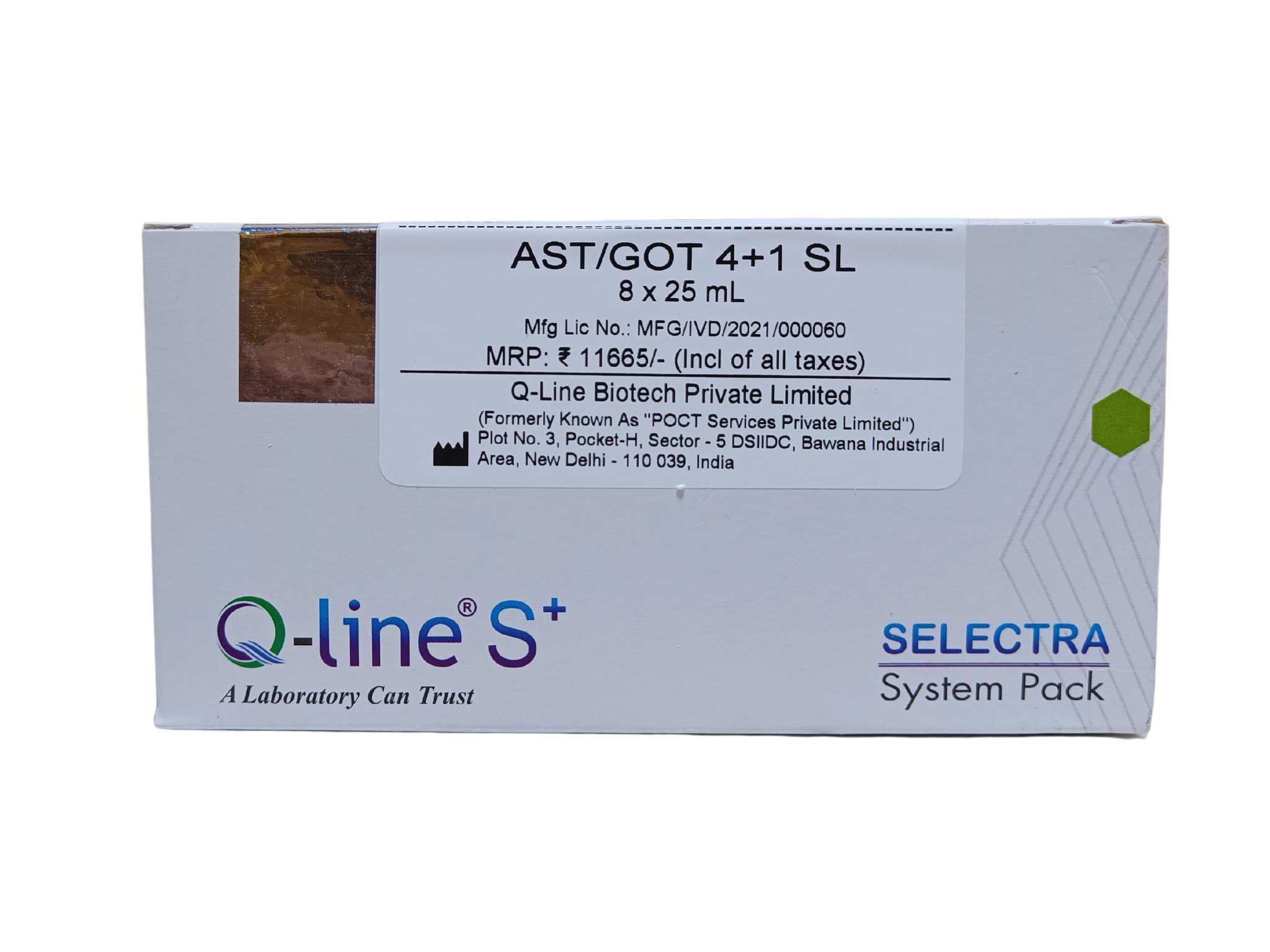
AST - (Aspartate Aminotransferase)
AST | sGOT | IFCC
| REF | Volume |
|---|---|
| N/A | N/A |
Product description:
Aspartate transaminase (AST), which may also be referred to as aspartate aminotransferase or
serum glutamic-oxaloacetic transaminase (SGOT) in other literature, catalyses the reversible
transfer of amino group between aspartate and glutamate. Like ALT, AST is found in the cytoplasm
of hepatocytes and other tissues, including skeletal muscle. Injury to hepatocytes causes
leakage of AST into the extracellular compartment with subsequent elevation in serum AST
activity. Since it is more widespread than ALT, elevated AST may be indicative of heart,
pancreas, anaemia, kidney, and musculoskeletal pathologies and is usually associated with other
tests to support a diagnosis.
AST activity may also be elevated in times of skeletal muscle injury in preclinical species. The
magnitude of AST elevation is usually lesser than ALT when both are elevated due to
hepatocellular injury; because of the longer half-life of ALT and the greater fraction of AST
that is bound to the mitochondria. The practice of considering a high ratio of AST/ALT to be
more indicative of skeletal muscle injury has been suggested and may aid in distinguishing
muscle versus liver injury.
